Keep a coffee brew record you will use again
Record the recipe and one useful observation without turning each cup into a long tasting form.
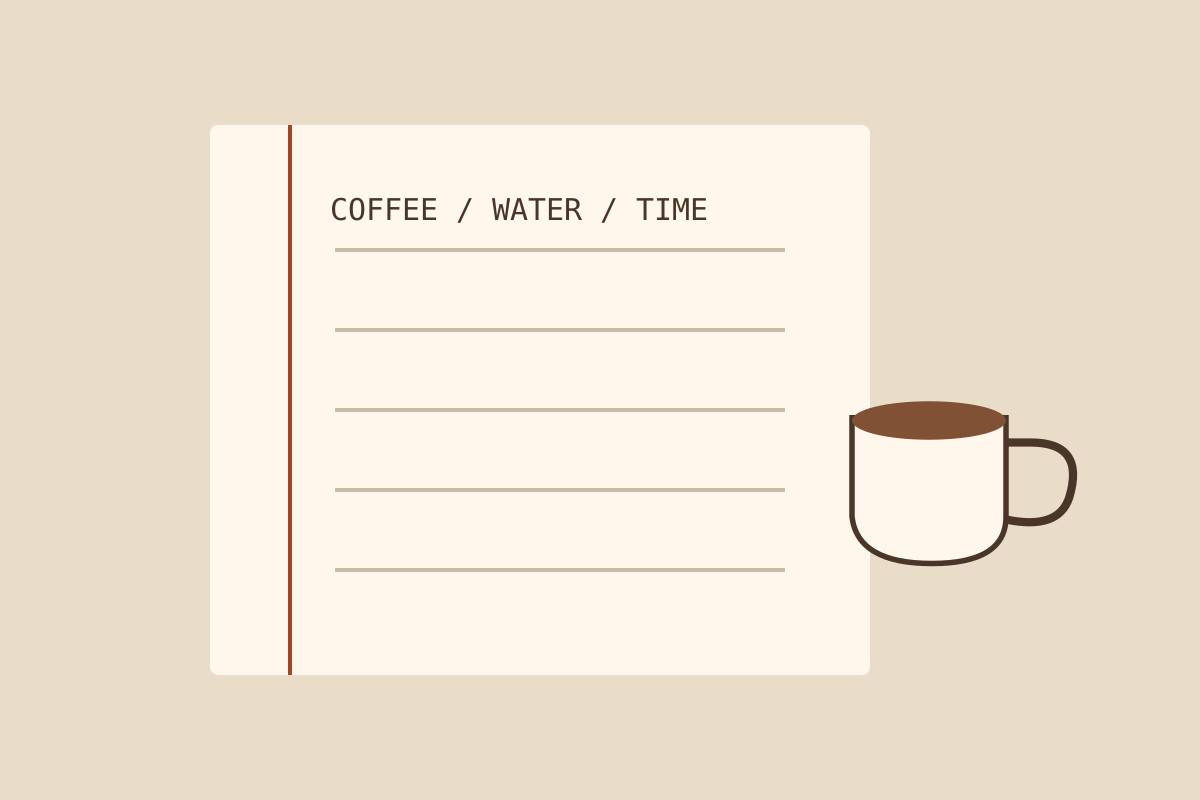
‘Try that again’ is easier to act on when the recipe is written down. A short brew record needs enough detail to repeat the cup, plus one observation that helps you decide what to do next.
Save the recipe
Keep the coffee identity and the measurements together. Use this small form as a starting point, leaving a field blank when you did not measure it.
| Field | Your record |
|---|---|
| Coffee and date opened | |
| Brewer and grinder model | |
| Coffee dose in grams | |
| Water input in grams | |
| Grind setting | |
| Water temperature, if measured | |
| Timing and when the timer started | |
| Observation |
For example, ‘20 g coffee, 320 g water’ specifies an input ratio of 1:16. It does not say which method you used or how long you brewed. Add those details if you want to repeat the process. This is a hypothetical recipe example, not a reported tasting trial.
Describe what you noticed
‘I preferred this to yesterday’s cup’ is a valid observation. It does not need a list of fruit flavours or a numerical score. Use words that mean something to you when you read them later.
Keep explanations separate. If you suspect the grind caused a result, write that as a question to test rather than a proven cause. A change in coffee, water or technique could also affect the comparison.
Choose the next comparison
Circle or mark the one recipe detail you intend to change. Keep the others as steady as practical and make another short note after brewing.
If you lose track of a measurement, record that too. An honest gap is more useful than a precise number reconstructed from memory. Keep the form beside your equipment so the next entry takes only a moment.